Friday, July 11, 2014

Starbound (PC) Review

Starbound has provided my wife and I many hours of fun so far, and I definitely recommend it to anyone who loves a good side-scrolling adventure game. The game still is in Beta, which means of course that it's still in development and is far from flawless, but it is still fun. I've summed up the main pros and cons of the game below:


Pros
-Enjoyable Multiplayer 
-Countless randomly-generated planets to explore (including NPC villages, dungeons, etc.) 
-Unique playable races
-It's still not done! Even more stuff to come!

Cons
-It's still not done. Some parts are definitely missing, and the game at times is unstable.
-Monsters have very little variation (flying or walking, passive or aggressive)
-Guns are not craftable, hard to find, and weak

The Good

Multiplayer
I found exploring new worlds much more fun with a friend there to do it with, even if it did mean sharing all the resources and items that are found with them. We played Multiplayer only via LAN, but setting things up was really easy. I launched the server on my computer, and then my wife was able to connect quick and easy to my server and join me in-game. Starbound has a system so you can invite other users on the same server to join your party, and then you can beam up to each others' ships--which often makes it much easier to join a friend than trying to pinpoint which galaxy, star system, and planet your pal is on. 

Countless Planets
There is a ridiculously large amount of planets for you to explore in this game. Honestly there is no way you'd ever have time to explore them all. The Starbound universe is broken up into five sectors, in order of difficulty: Alpha, Beta, Gamma, Delta and X. Each sector has countless stars, each of which has a solar system with multiple planets. Nearly all the planets that you will encounter you will be able to land on and explore. 

There are also multiple planet biomes (jungle, snow, savannah, etc.) that you will encounter, some being more dangerous than others. Each planet will have weather patterns as well, ranging from rain and snow to dangerous meteor showers or flaming rain. You'll also find various NPC villages on the different worlds, some friendly and others hostile. You honestly never really know what exactly you'll come across when you go to a new planet, and it really gives you a solid sense of wonder and adventure to explore the universe.

Races
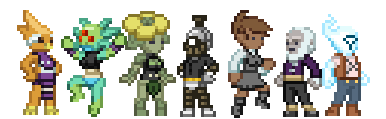
There are currently six playable races in Starbound, each with their own unique backstory, ship, craftable weapons and armor, and food recipes. This makes the game experience slightly different for you depending on which race you play as, and NPCs will also treat you differently depending on what race you are. 

Beta
The game is still in Beta, which means that there is still yet more great content to come in this game. It's fun now, but it has the potential to be even more fun as the game progresses. 


The Bad

Beta
Yeah, it's also a negative thing that the game is still in Beta. I already knew that it was an Early Access game, so it wasn't too much of a surprise to me. However, this means that the game isn't complete and polished, and is still unstable at times. If you want a complete and finished product, you should probably wait until the game is officially released. 

Monsters
There are indeed a vast number of randomly generated monsters to be found in this game, but sadly they all act more or less the same. The flying monsters flutter around until they see you, then they swoop in and do a ranged attack of some sort; walking monsters wander until they see you, and then jump after you to try and do melee damage. The monsters may look vastly different, but in the end they all act the same. 

Guns
I was intrigued by the fact that they implemented guns in this game, and it made sense considering its Sci-Fi genre. However, especially in the early levels, guns are incredibly hard to find, and the ones that you do find deal very little damage and consume a lot of your energy to use. I was really hoping to be able to craft guns, the same way you can craft melee weapons and armor, but currently this isn't the case. The lack of gun crafting, and the poor performance of the weapons that are find-able makes using melee weapons a much more viable option. 

Conclusion

This game isn't without flaws, but if you're willing to look past the fact that it's in Beta and still has yet more to come, this game is well worth the time to play. It's currently $15 on Steam, and  I've certainly gotten my money's worth out of it so far. I give Starbound an 8/10. 


Wednesday, June 11, 2014

Martinique Board Game Review


Martinique: A game of  exploration
and adventure
Since my wife and I are somewhat reclusive, I've been on the lookout for fun 2-player board games for us to play. While poking around in the local board game shop, I stumbled across Martinique. This two-player game allows you to play the role of two rival pirate captains, trying to find a legendary buried treasure on the tropical island Martinique. The game play mechanics, from how I could best describe it, would be a combination of Clue, checkers, and a matching game. 

The game comes with a fold-up board, 8 pirates (wooden pegs, really), 96 souvenir tiles, 16 map tiles, 3 joker tiles, 2 counters (once again, wooden pegs), and a linen bag.  The board is made to look like a pirate's treasure map, with a grid overlaying the map.

Setup


Game setup doesn't take very long at all, as long as you keep the souvenir tiles separated from the map tiles. First, you set the coordinates of where the treasure is going to be at the end of the game. This is done by separating all the map tiles into two face-down piles, one for the letter and another for the number coordinates. The rest of the tiles are then mixed up and placed face-down on the game board on the designated map clue piece squares, and two being placed in the middle of the board. 

Once the map pieces have been placed, the rest of the map is covered with souvenir tiles (with the exception of the middle four squares, which have joker pieces and two map pieces. 

Game Play


     The game-play is broken down into two stages, exploring and digging. According to the story of the game, it all takes place in one day--the exploring starting at sunrise, and then the digging occurring at sunset of the same day.

Exploration


 During the exploration phase, each player takes turns moving their four pirate crewmen around the board, collecting souvenirs and clues as to where the treasure could be. Movement is dictated by the tiles that you start on--they have a number in the corner, which indicates how many spaces you get to move that turn. Additionally, you add the tile that you start your turn on to your collection, whether it be a map piece or a souvenir. 

 In order to actually bring any of the souvenir pieces on board your ship, you have to match it with a special combination of corresponding pieces on the board. Having more souvenirs loaded onto your ship at the end will give you an advantage, but only if neither of you end up finding where the treasure is buried.

The clues that you find to the treasure's location are actually either letters or numbers that correspond to the rows and columns on the grid of the map. Any clue you find will tell you where the treasure isn't, so the more clues you have the more accurately you'll be able to guess the actual location. While moving around the board, if you end up jumping over an opponent's piece, they are forced to display one of their clues to you. This was a necessary component, because otherwise it always seemed that we each would get exactly half the clues. 

Once a piece ends its turn on an empty space (one without a souvenir or a map piece), that crewman ise placed in the island Tavern. Once all eight crewmen are in the Tavern, the exploration phase ends and the next phase begins.

Digging


The second half of the game, the digging phase, involved each player placing their four pirate crewmen on the board, indicating where they will try to dig for the treasure. The order in which the pieces were placed in the Tavern during the exploration phase reflects what order each piece will be placed on a map coordinate for digging.

The game board for Martinique
Once all of the crewmen have been placed, the actual coordinates of the treasure are revealed. Whoever had a crewman on the right coordinates wins the game. If neither player guessed the right coordinates, then each player totals up scores from how many souvenirs they loaded on their ship to see who wins.

On average, the game took 20-30 minutes to play, but because so much strategy is involved the game-play didn't feel as fast-paced as I would have expected, but it was fun nonetheless.


Price


I didn't really shop around before buying the game, so it was $23 from the shop I was at. I checked on Amazon today (6/11/2014), and it was listed for $15.32 ($9.83 + $5.49 shipping). My one complaint about the board itself was that it didn't seem to lay flat very well, but I'm sure with further use it will eventually lay more flat. I would have also liked to have actual pirate figurines instead of wooden pegs for the pirate crew. However, from the quality of the materials that the game was made of, the price I paid seemed pretty fair.  

Replay Value


There is enough different strategies that you can employ when playing this game that it definitely leaves you wanting to try it out again. The fact that the treasure is randomly placed each time adds that same sense of adventure that you find playing Clue, when trying to narrow down whodunnit. It also helps to know that playing the game through isn't an immense time commitment, and that you can quickly play it through in half an hour or so. 

Score


Overall, I give Martinique a rating of 7.5/10. The game was indeed fun, and gave the players a sense of adventure. I do wish that there had been a bit more to the game than just trying to gather tiles and then guess the coordinates of the treasure, but it's well worth it for what you pay.